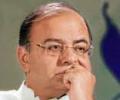
The finance minister said the economy had been slowing.

Every twist and turn in KMC's civil service career is attributed to serendipity, an aptitude for making desirable discoveries by accident. He plays down his capabilities, which took him to the top of the civil service as the Cabinet Secretary or his misfortune in losing a daughter in her prime and suggests that his career was indeed serendipitous, observes Ambassador T P Sreenivasan.

'As his close associate Som Pal told me, "Mandal was never V P Singh's brainchild. It was a Janata Party commitment he inherited".' 'He would have done it anyway at some point, but the specific timing of his decision was dictated entirely by political exigency -- his government was threatened.' 'It also turned out to be a game changer in Indian politics.'

The Telangana Group of Ministers on Friday reviewed the progress made by the Andhra Pradesh government with regards to the bifurcation of the state on various fronts.
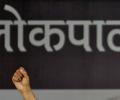
A total of Rs 39.67 crore has been allocated to the Lokpal for the next fiscal, according to Union Budget 2021-22 presented by Finance Minister Nirmala Sitharaman.

'For the common man, the economic conditions are not going to get better.'

Kejriwal alleged that for the last few months, the interference of the lieutenant governor in the elected government's working has increased day by day.
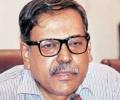
The term of the last chairman of the pension regulator, Yogesh Agarwal, was cut short by the finance ministry in November.

If you opt for a term-life cover, buy separate policies to cover the loan for all the co-borrowers in a home loan for a sum assured equal to the home loan amount.
